Just found a wonderful online site for buying educational tools. Most of the items I'd get from here I'd put into my "Learners Closet". I haven't yet talked about our closet but I will do a post about it when I get back from vacation!
Hope you enjoy this site....
http://www.lakeshorelearning.com/home/home.jsp
<3
Thursday, September 29, 2011

Monday, September 26, 2011
Allowance & Chores
A very important part of a TJEd home is to teach your children not only the love of learning, but also the love of working. They need to be able to enjoy working and to find a sense of worth by completing a task that has been assigned to them.
Every home does their "chore system" differently but I thought I would share mine in case you are looking for a different point of view.
Allowance:
In our house, the kids don't "earn" allowance...they don't get paid "per chore completed". We feel strongly that the kids should be helping around the house because they are a member of the family, not because they want to earn some money. We want to teach them that the reason we do things for others (our family, in this situation) is because we love them, not to get something in return.
I began searching the scriptures to find some guidance. I prayed for quite a while about the subject because I did feel so strongly about "helping out because you are a member of this family". I decided to analyze how our Father in Heaven blesses us and did some research on the subject. I found that the Lord has blessings already waiting for us, blessings he wants to give us, blessings because he loves us. I then realized that the Lord usually withholds blessings, instead of giving blessings. I found that to be very interesting....He has blessings he's going to give us but then has to withhold some due to our choices. This was just what I needed to more fully understand and it became the basis of our "chore & allowance" system.
I dedicated one family night to this subject and found that the kids easily understood why I had decided to take this different approach. I explained to the kids that they would each get a certain amount of money per week (varying by age) and they were expected to help out where needed, do their duties, be kind to one another, not have a bad attitude and obey. I explained that we, as their parents, really wanted them to receive all the money (aka: blessings) we had waiting for them. But it was up to them if they received it all because some could be withheld if they were having problems in any of the areas I listed above. I explained that they were not getting a "reward" for a certain act but it was a "blessing" we wanted to give them for overall good behavior.
When we do have to withhold money, we talk with the child about why and try and help them see how they can alter their choices to ensure they are able to receive all we have planned to give them.
Chores:
So in our family the "daily chore" system really doesn't work. They do have a "duty" that they are expected to complete whenever it's needed. Hannah's duty is dishes, so it's an all of the time type of thing. Gabe's duty is feeding and watering the cats whenever it's needed.
Instead of doing "daily chores" we decided to do "Monday Morning Cleaners". Every Monday morning the kids know they have certain duties to complete. Both kids need to "clean" their room (not just straighten), they have to "clean" their playroom (not just straighten), Hannah vacuums & dusts the entire house, and Gabe cleans the upstairs bathroom. Their duties are to be completed before lunch. After lunch we usually make a special treat, like brownies or cookies as a fun reward for a clean, pleasant home.
I feel my kids are much more focused when they are expected to "really" clean only once a week. For some reason, it doesn't feel so daunting to them like it would if I spread the duties throughout the week. During the rest of the week, we just randomly tidy things up as needed.
I truly believe that having a responsibility in the home is very important to children. They begin to realize how needed they are in the family and gain that much-needed self confidence.
We are definitely still working toward the "love of work" with both of them, but I think they are making progress and so is their mother...yes, I'm still learning how to "love" work...it's interesting how much I'm growing in that area as I travel down my "Love of Learning" path :)
<3
Every home does their "chore system" differently but I thought I would share mine in case you are looking for a different point of view.
Allowance:
In our house, the kids don't "earn" allowance...they don't get paid "per chore completed". We feel strongly that the kids should be helping around the house because they are a member of the family, not because they want to earn some money. We want to teach them that the reason we do things for others (our family, in this situation) is because we love them, not to get something in return.
I began searching the scriptures to find some guidance. I prayed for quite a while about the subject because I did feel so strongly about "helping out because you are a member of this family". I decided to analyze how our Father in Heaven blesses us and did some research on the subject. I found that the Lord has blessings already waiting for us, blessings he wants to give us, blessings because he loves us. I then realized that the Lord usually withholds blessings, instead of giving blessings. I found that to be very interesting....He has blessings he's going to give us but then has to withhold some due to our choices. This was just what I needed to more fully understand and it became the basis of our "chore & allowance" system.
I dedicated one family night to this subject and found that the kids easily understood why I had decided to take this different approach. I explained to the kids that they would each get a certain amount of money per week (varying by age) and they were expected to help out where needed, do their duties, be kind to one another, not have a bad attitude and obey. I explained that we, as their parents, really wanted them to receive all the money (aka: blessings) we had waiting for them. But it was up to them if they received it all because some could be withheld if they were having problems in any of the areas I listed above. I explained that they were not getting a "reward" for a certain act but it was a "blessing" we wanted to give them for overall good behavior.
When we do have to withhold money, we talk with the child about why and try and help them see how they can alter their choices to ensure they are able to receive all we have planned to give them.
Chores:
So in our family the "daily chore" system really doesn't work. They do have a "duty" that they are expected to complete whenever it's needed. Hannah's duty is dishes, so it's an all of the time type of thing. Gabe's duty is feeding and watering the cats whenever it's needed.
Instead of doing "daily chores" we decided to do "Monday Morning Cleaners". Every Monday morning the kids know they have certain duties to complete. Both kids need to "clean" their room (not just straighten), they have to "clean" their playroom (not just straighten), Hannah vacuums & dusts the entire house, and Gabe cleans the upstairs bathroom. Their duties are to be completed before lunch. After lunch we usually make a special treat, like brownies or cookies as a fun reward for a clean, pleasant home.
I feel my kids are much more focused when they are expected to "really" clean only once a week. For some reason, it doesn't feel so daunting to them like it would if I spread the duties throughout the week. During the rest of the week, we just randomly tidy things up as needed.
I truly believe that having a responsibility in the home is very important to children. They begin to realize how needed they are in the family and gain that much-needed self confidence.
We are definitely still working toward the "love of work" with both of them, but I think they are making progress and so is their mother...yes, I'm still learning how to "love" work...it's interesting how much I'm growing in that area as I travel down my "Love of Learning" path :)
<3
Wednesday, September 14, 2011
Thirteen Colonies Craft
Since we are studying the United States, I decided to also focus on The Thirteen Original Colonies.
I found a really fun and useful craft for the kids that's centered around The Thirteen Colonies. It also focuses on the Postal Abbreviations, which is another area we are currently focusing on. Hannah really has a love for history and is really enjoying learning about our wonderful nation!


I found a really fun and useful craft for the kids that's centered around The Thirteen Colonies. It also focuses on the Postal Abbreviations, which is another area we are currently focusing on. Hannah really has a love for history and is really enjoying learning about our wonderful nation!

As you can see, each circle represents one of the 13 Colonies. When we make it through the first 13 states, I'll move onto other states that followed. Those circles will be alternating, red & white, which will symbolize the stripes on the flag.

On the back of each circle, the kids can write some facts about the state they learned about. By the end, Hannah will have a wonderful set of flashcards to help her remember the facts about each state. Gabe likes to just draw pictures of what he learned, which is wonderful. Sometimes he's present for the "Let's learn about a state" time and sometimes he chooses to go play. He was there for Delaware, as you can see, but decided to go play airplanes for Pennsylvania. I always ask him if he'd like to join us and usually he does but there are times when the imaginary roar of an airplane is just too tempting!! :)
<3
The Family Tree
I chose our family's genealogy as an area of discussion over the next six months. The kids are really excited about the subject, which makes me so happy!! I LOVE family history and I'm hopeful to encourage my children to have that same love.
 The project I came up with was to talk about two of our family members a week. After we learn about someone, we then add their leaf to our "Family Tree". Hopefully, by the end of the six months, our tree will be beautiful and full. This is a great project for Gabe, since he is still in Core Phase.
A little while back, I realized that Hannah, who does know all of our current family members, didn't know how we all fit together. One day she asked who my grandfather (who's dead) was married to. I gave her the "great grandma...of course" answer, thinking she just hadn't thought the question through. Then she looked at me with confused eyes and said, "I thought she was married to Uncle George!". I had to explain that "Uncle George" is actually great grandma's son...NOT husband.
We then went over other various family members explaining how each family fit into our "family tree". Hannah seemed thrilled at all of the new information, or more precisely, the new connections. I could see her drawing lines from one family member to the next, like a big connect-the-dots, inside her head.
It was this incident that helped me understand that family history is not only those who have gone before us but also those who are still among us.
I am so looking forward to talking about our family members, past and present, and I hope my children gain a love for not only "family" but for every "family member".
<3

A little while back, I realized that Hannah, who does know all of our current family members, didn't know how we all fit together. One day she asked who my grandfather (who's dead) was married to. I gave her the "great grandma...of course" answer, thinking she just hadn't thought the question through. Then she looked at me with confused eyes and said, "I thought she was married to Uncle George!". I had to explain that "Uncle George" is actually great grandma's son...NOT husband.
We then went over other various family members explaining how each family fit into our "family tree". Hannah seemed thrilled at all of the new information, or more precisely, the new connections. I could see her drawing lines from one family member to the next, like a big connect-the-dots, inside her head.
It was this incident that helped me understand that family history is not only those who have gone before us but also those who are still among us.
I am so looking forward to talking about our family members, past and present, and I hope my children gain a love for not only "family" but for every "family member".
<3
Saturday, September 10, 2011
The Phases of Learning
There are several phases in A Thomas Jefferson Education. Each phase has a possible age range but since everyone is different, the ages always vary. For that purpose, I will only be listing the phases and not approximate ages to go with them.
The Phases of Learning, by Oliver DeMille, in a nutshell...
Core Phase: During Core Phase work times and play times are scheduled, with children allowed to choose their own subjects of play during play time. As they get older, play includes reading, math and other subjects that students choose to engage for fun.
Love of Learning Phase: the student might choose a structure of 1 or 2 or 3 hours a day of set study time; it is important that the student choose it, and that the mentor help the student learn accountability for his choice.
If the student won’t choose it, you haven’t inspired him yet—get to work. Don’t fall back into requiring. Pay the price to inspire, and trust the process–it’s the only way to get the result of the student owning their role as a self-educator.
Scholar Phase: By the early Scholar Phase a student will likely be studying 6-8 hours a day on topics of their deepest interest.
Depth Phase: the student increases the structured time and goes into more depth.
In our household, we have one Core Phase child, Gabriel, and soon there will be two more when the twinners get a little bit older. We also have two in Love of Learning Phase. One is our 10yr old girl, Hannah, and the other is her 37yr old mother...me! I grew up on the conveyor belt and so I am now finally getting to learn what "I WANT" to learn! :)
Since Core Phase and Love of Learning Phase are the phases that we are currently in, in our household, I'm going to give a little deeper explanation of those phases. If you have children (or yourself) who you feel are in a different phase, please just refer to Oliver DeMille's "Leadership Education-The Phases of Learning" book. There's a link on the main page of this blog.
Phases as taught by Oliver DeMille, Leadership Education-The Phases of Learning:
Core Phase:
Core Phase is a basis of a life. A good Core Phase naturally provides the foundation for a good life, a great Core Phase for a great life, and so on. Core Phase is also a basis of an education. It is the basis of a family, and it's generations. It is the basis of society's culture, politics, economy, art, law, government, etc. It is, in short, the foundation of a person--who he or she is and what he or she can and will become. The foundation itself must be solid. During Core Phase, we lay the foundation for all learning and service in the child's life. The "curriculum" is simply:
Love of Learning Phase: Love of Learning naturally follows the establishment of a solid core. During the Love of Learning Phase, the student falls deeply in love with learning, studying, knowing and learning even more. If a person is forced in pressured formal schooling or assignments during this phase, she can develop a hate of learning attitude or even just a dislike of studying.
Ideally, however, each young person has the opportunity to freely fall in love with the joys of learning and to experience first-hand how wonderful learning can be. These are the years when children dabble with learning, getting to know "what's out there." If they have come from the Core Phase in good order they are usually fearless, feel almost everything will be interesting and believe they will be able to do whatever they set their minds to.
Love of Learning "curriculum"...
There are 55 ingredients for Core and Love of Learning Phase. I will list them here but I will not go into what each of them mean. I will have future posts that will go over what each of them are and how I'm applying them in my home. They are...
I want to clearly state that A Thomas Jefferson Education is not just for the kids, it's for the entire family. It's NOT a curriculum, it's A WAY OF LIFE!
<3
The Phases of Learning, by Oliver DeMille, in a nutshell...
Core Phase: During Core Phase work times and play times are scheduled, with children allowed to choose their own subjects of play during play time. As they get older, play includes reading, math and other subjects that students choose to engage for fun.
Love of Learning Phase: the student might choose a structure of 1 or 2 or 3 hours a day of set study time; it is important that the student choose it, and that the mentor help the student learn accountability for his choice.
If the student won’t choose it, you haven’t inspired him yet—get to work. Don’t fall back into requiring. Pay the price to inspire, and trust the process–it’s the only way to get the result of the student owning their role as a self-educator.
Scholar Phase: By the early Scholar Phase a student will likely be studying 6-8 hours a day on topics of their deepest interest.
Depth Phase: the student increases the structured time and goes into more depth.
In our household, we have one Core Phase child, Gabriel, and soon there will be two more when the twinners get a little bit older. We also have two in Love of Learning Phase. One is our 10yr old girl, Hannah, and the other is her 37yr old mother...me! I grew up on the conveyor belt and so I am now finally getting to learn what "I WANT" to learn! :)
Since Core Phase and Love of Learning Phase are the phases that we are currently in, in our household, I'm going to give a little deeper explanation of those phases. If you have children (or yourself) who you feel are in a different phase, please just refer to Oliver DeMille's "Leadership Education-The Phases of Learning" book. There's a link on the main page of this blog.
Phases as taught by Oliver DeMille, Leadership Education-The Phases of Learning:
Core Phase:
Core Phase is a basis of a life. A good Core Phase naturally provides the foundation for a good life, a great Core Phase for a great life, and so on. Core Phase is also a basis of an education. It is the basis of a family, and it's generations. It is the basis of society's culture, politics, economy, art, law, government, etc. It is, in short, the foundation of a person--who he or she is and what he or she can and will become. The foundation itself must be solid. During Core Phase, we lay the foundation for all learning and service in the child's life. The "curriculum" is simply:
- right and wrong
- good and bad
- true and false
- relationships
- family values, especially spiritual culture
- family identity, including family history and mission
- family routines and responsibilities
- accountability
- the value and love of work and play
Love of Learning Phase: Love of Learning naturally follows the establishment of a solid core. During the Love of Learning Phase, the student falls deeply in love with learning, studying, knowing and learning even more. If a person is forced in pressured formal schooling or assignments during this phase, she can develop a hate of learning attitude or even just a dislike of studying.
Ideally, however, each young person has the opportunity to freely fall in love with the joys of learning and to experience first-hand how wonderful learning can be. These are the years when children dabble with learning, getting to know "what's out there." If they have come from the Core Phase in good order they are usually fearless, feel almost everything will be interesting and believe they will be able to do whatever they set their minds to.
Love of Learning "curriculum"...
- Example, environment, opportunities, work, play, study, projects, field trips, the library, family room, inspiring parent, mentors, guidance, the bookshelf, mornings, afternoons, evenings, Summers, Winters, exploring, freedom, fun, personal attention, younger siblings, older siblings, mom, dad, grandparents, questions, and discussions.
There are 55 ingredients for Core and Love of Learning Phase. I will list them here but I will not go into what each of them mean. I will have future posts that will go over what each of them are and how I'm applying them in my home. They are...
- Sundays
- Weeks
- Mornings
- Kidschool
- The Bean-Counter Game
- The Six Month Purge
- The Six Month "No"
- The Six Month Inventory
- The Annual Project
- The Annual Break
- Afternoons
- Evenings
- Winters
- Summers
- The Weekly Club
- The Binder
- The Field Trip
- The Library Trip
- The Bookshelf
- The Closet
- The Family Room
- The Entertainment Room
- The Donation Box
- The Storage Box
- The Weekly Lesson
- The Safety Kids Class
- The Mom School
- The Computer
- The Kitchen Table
- The Cleaning Time
- The Academic "No"
- The Discipline "No"
- The Yard
- The Evening Reading List
- The Chores
- The Grandparent Mentoring
- Teaching The Model
- The Central Classic
- The Awakening
- The Interruption "Yes"
- The Stateswoman
- The Core Reading List
- The Degree Program
- The Formal Ball
- The Assignment
- The Mission
- The Friend
- The Core Phase Curriculum
- The Love of Learners Curriculum
- Spring if for Science
- Fall is for Beginnings
- The Subscription
- The Dinner Meal
- The Discipline "Yes"
- The Academic "Yes"
I want to clearly state that A Thomas Jefferson Education is not just for the kids, it's for the entire family. It's NOT a curriculum, it's A WAY OF LIFE!
<3
Friday, September 9, 2011
The Seven Keys to Great Teaching
There are seven areas that I focus on while I am mentoring my kids. They seem very simple but they are of great importance when it comes to A Thomas Jefferson Education.
Allow me to quote Oliver DeMille....
There are seven principles of successful education; when they are applied, learning occurs. When they are ignored or rejected, the quantity and quality of education decreases. Whatever the student’s individual interests or learning styles, these principles apply.
And whatever your role in education—home, public, private, higher education or corporate training—the application of any and eventually all of the seven keys will significantly improve your effectiveness and success.
1. Classics, not textbooks: Great ideas are most effectively learned directly from the greatest thinkers, historians, artists, philosophers and prophets, and their original works. Great works inspire greatness, just as mediocre or poor works usually inspire mediocre and poor achievement.
This first key means that in pursuit of a transformational education, in preference to second- or third-generation interpretations, we study original sources — the intellectual and creative works of the world’s great thinkers, artists, scientists, etc., in the form they were produced.
2. Mentors, not Professors: The professor/expert tells the students, invites them to conform to certain ideas and standards, and grades or otherwise rewards/punishes them for their various levels of conformity.
In contrast, the mentor finds out the student’s goals, interests, talents, weaknesses, strengths and purpose, and then helps him develop and carry out a plan to prepare for his unique mission.
Parents and teachers who apply the Seven Keys can be an effective part of the mentoring of a student in the early phases of learning, and help prepare the individual to fully take advantage of the influence of later mentors that will be formative for continued development and achievement.
3. Inspire, not Require: None of the keys is as highly celebrated and as poorly applied as this one. This is perhaps the least understood and least practiced of the Seven Keys. It is probably the single most important element of Leadership Education.
Slowly but surely I'm getting there. I'm understanding more and more that I can't educate my children....they have to educate themselves!!
Allow me to quote Oliver DeMille....
There are seven principles of successful education; when they are applied, learning occurs. When they are ignored or rejected, the quantity and quality of education decreases. Whatever the student’s individual interests or learning styles, these principles apply.
And whatever your role in education—home, public, private, higher education or corporate training—the application of any and eventually all of the seven keys will significantly improve your effectiveness and success.
1. Classics, not textbooks: Great ideas are most effectively learned directly from the greatest thinkers, historians, artists, philosophers and prophets, and their original works. Great works inspire greatness, just as mediocre or poor works usually inspire mediocre and poor achievement.
This first key means that in pursuit of a transformational education, in preference to second- or third-generation interpretations, we study original sources — the intellectual and creative works of the world’s great thinkers, artists, scientists, etc., in the form they were produced.
2. Mentors, not Professors: The professor/expert tells the students, invites them to conform to certain ideas and standards, and grades or otherwise rewards/punishes them for their various levels of conformity.
In contrast, the mentor finds out the student’s goals, interests, talents, weaknesses, strengths and purpose, and then helps him develop and carry out a plan to prepare for his unique mission.
Parents and teachers who apply the Seven Keys can be an effective part of the mentoring of a student in the early phases of learning, and help prepare the individual to fully take advantage of the influence of later mentors that will be formative for continued development and achievement.
3. Inspire, not Require: None of the keys is as highly celebrated and as poorly applied as this one. This is perhaps the least understood and least practiced of the Seven Keys. It is probably the single most important element of Leadership Education.
There are really only two ways to teach—you can inspire the student to voluntarily and enthusiastically choose to do the hard work necessary to get a great education, or you can attempt to require it of them.
Instead of asking, “what can I do to make these students perform?” the great teacher says, “I haven’t yet become truly inspirational. What do I need to do so that these students will want to do the hard work to get a superb education?”
4. Structure Time, not Content: Great mentors help their students establish and follow a consistent schedule, but they don’t micromanage the content.
Of course, this principle is applied differently at different levels of student development...
Phases of Learning: There are 4 phases of learning: Core Phase, Love of Learning Phase, Scholar Phase, and Depth Phase. I will talk about these phases in my next post.
5. Quality, not Conformity: With the student feeling inspired and working hard to get a great education, the mentor should give appropriate feedback and help.
But the feedback should ideally not take the form of common “grading”, but rather personalized feedback, commenting on the particular strengths of a work, including clarity of expression, original thought, technical precision, correlation of principles and ideas, effectiveness of argumentation or other reader appeal, etc.
These are clearly directed toward the evaluation of a written work, but similar concepts can be adapted for feedback on other products of a student’s scholarly efforts, be they organizational, artistic, personal, interpersonal, innovative, etc. Great teachers and schools reward quality–quality work and quality performance.
6.Simplicity, not Complexity: The more complex the curriculum, the more reliant the student becomes on experts, and the more likely the student is to get caught up in the Requirement/Conformity trap.
This leads to effective follower training, but is more a socialization technique than an educational method.
Education means the ability to think, independently and creatively, and the skill of applying one’s knowledge in dealing with people and situations in the real world.
Great teachers train great thinkers, and great leaders, by keeping it simple: students study the greatest minds and characters in history in every field, write about and discuss what is learned in numerous settings, and apply what is learned in various ways under the tutelage of a mentor.
7. YOU, not Them: If you think these principles are about improving your child’s or student’s education, you will never have the power to inspire them to do the hard work of self-education.
Focus on your education, and invite them along for the ride.
Read the classics in all fields, find mentors who inspire and demand quality, structure your days to include study time for yourself, and become a person who inspires great education.
A parent or teacher doesn’t have to be an “expert” to inspire great education (the classics provide the expertise), but he does have to be setting the example.
So there you have it, the Seven Keys... what I'm trying to accomplish in my home on a daily basis. I find it hard some days to stay off "the conveyor belt" but when I find myself "on the conveyor best", I get off as quickly as I can. It can be so hard to break away from what you've always known, even if you know it's not what's best for you. We are such creatures of habit and tend to find our wheels back in the same old ruts.
Slowly but surely I'm getting there. I'm understanding more and more that I can't educate my children....they have to educate themselves!!
Knowledge truly is Freedom....true knowledge...Liber!
Liber (Latin): the root word in Library and Liberty!! Without Liber there is no true education nor true liberty!!
<3
Liber (Latin): the root word in Library and Liberty!! Without Liber there is no true education nor true liberty!!
<3
Friday, September 2, 2011
Our Symbols
After teaching my kids that the flag was the symbol for our nation and what it symbolized, we talked about what our symbols would look like if we each had one. Then Hannah and I sat down (Gabe by this point has tuned out and was playing airplanes...like always) and created a drawing of what our symbol would look like. Then we both took turns trying to guess what the other's symbol represented. I was amazed at some of Hannah's choices of symbols. I figured out all but the boat. But I was more amazed that Hannah figured out what my symbol meant, except for the anchor. She's one smart cookie and she knows her mommy well!
Here are our symbols. Can you guess what they mean?


When Greg got home from work, Hannah showed him what we had been up to that day. She got him to try and guess what our "symbols" represented. It was somewhat humorous to hear what he thought they meant. After hearing their true meanings, Greg decided he wanted to make one as well. He felt inspired by our symbols and wanted one of his own.
I'm actually tempted to do a replica of my symbol since this one was done in a matter of minutes with colored pencils. I'd like to create an actual piece of art that I could possibly frame. Maybe I'll add that to my next "Six Month Goals"! :)
<3
Here are our symbols. Can you guess what they mean?

Hannah's symbol

My symbol
When Greg got home from work, Hannah showed him what we had been up to that day. She got him to try and guess what our "symbols" represented. It was somewhat humorous to hear what he thought they meant. After hearing their true meanings, Greg decided he wanted to make one as well. He felt inspired by our symbols and wanted one of his own.
I'm actually tempted to do a replica of my symbol since this one was done in a matter of minutes with colored pencils. I'd like to create an actual piece of art that I could possibly frame. Maybe I'll add that to my next "Six Month Goals"! :)
<3
Roses & Potatoes
My kids love to do art projects. I decided that every Tuesday we would complete an "Arts & Crafts" project. I've done some searching on the Internet and in some children's magazines and found some wonderful ideas!
While we were learning about our National Anthem and the symbolism of our flag, we also learned about our National Bird, the Bald Eagle, and our National Emblem, the Rose. After learning about the rose, the kids had a chance to make tissue paper roses. It was lots of fun and when Daddy got home, he had a beautiful bouquet waiting for him on his desk! :)

Another project we had fun with was "Potato Painting" shirts. The kids got to be creative artists by using potatoes. I cut different shapes in raw potatoes then they used them as stamps to apply paint to their shirts. Hannah was a very dedicated artist (Love of Learner) while Gabe (Core Phase) applied a couple of "tornadoes" (go figure), out of the triangle shaped potato, and debris, out of the square potato, then began playing with his airplanes again. I ended up adding Gabe's name to the bottom of his shirt because he asked me to. If I were to do this over again, I would have definitely purchased a shirt for myself so I could have taken part in the creative process!

Kids love to access their creative side, and fun projects that they can wear, are a wonderful way to have them gain pride in their work.
While we were learning about our National Anthem and the symbolism of our flag, we also learned about our National Bird, the Bald Eagle, and our National Emblem, the Rose. After learning about the rose, the kids had a chance to make tissue paper roses. It was lots of fun and when Daddy got home, he had a beautiful bouquet waiting for him on his desk! :)

Hannah's rose
Another project we had fun with was "Potato Painting" shirts. The kids got to be creative artists by using potatoes. I cut different shapes in raw potatoes then they used them as stamps to apply paint to their shirts. Hannah was a very dedicated artist (Love of Learner) while Gabe (Core Phase) applied a couple of "tornadoes" (go figure), out of the triangle shaped potato, and debris, out of the square potato, then began playing with his airplanes again. I ended up adding Gabe's name to the bottom of his shirt because he asked me to. If I were to do this over again, I would have definitely purchased a shirt for myself so I could have taken part in the creative process!

My kids showing off their new creations!
Kids love to access their creative side, and fun projects that they can wear, are a wonderful way to have them gain pride in their work.
Helpful Links:
- Tissue Paper Flowers Link~http://crafts.kaboose.com/flower2.html
- Potato Painting info~ Parents Magazine-I believe it was the July issue
<3
Thursday, September 1, 2011
Our Field Trip to Mt. Rainier
Our first field trip for this six month period was to the awe-inspiring Mount Rainier!!

It was THEE PERFECT field trip for Gabe since he seems to have an obsession with any natural disaster. His latest birthday cake was actually a volcano and HE LOVED IT!!!
First we went to Crystal Mountain and took the gondola ride up the mountain, which was so beautiful. I was sad that we couldn't see Mt. Rainier until we got to the top of the mountain but I still really enjoyed it.


We ate at the diner on the top of the mountain, which boasted about being the highest restaurant in the US...very cool.

There were adorable little chipmunks that would take food right out of our hands and there were also an overabundance of ladybugs. I never thought I could become annoyed by ladybugs BUT I was wrong!


 I love this picture of Emma and Greg.
How can a girl not be thrilled when she's visiting Mt. Rainier?!?

After coming back down on the gondola, we proceeded to our next stop, which was the Paradise Inn and Visitors Center, which I thought was very educational and a very nice facility. The 20 minute video we watched, while there, was chuck full of great facts about Mt. Rainier and it had the kids freaked out it was going to explode while we were driving home. The kids thought it was cool to get to play with some snow that still hadn't melted beside the visitors center.


We plan to redo this field trip when the twinners are a bit older, maybe next Spring, because we'd love to go on the hiking trials that they have for families to enjoy. The scenery was breathtaking and being so close to such an enormous active volcano was quite an experience. I would definitely recommend this to any family wanting a "one day get-away"!!
Helpful links:
<3

Mt Rainier
It was THEE PERFECT field trip for Gabe since he seems to have an obsession with any natural disaster. His latest birthday cake was actually a volcano and HE LOVED IT!!!
First we went to Crystal Mountain and took the gondola ride up the mountain, which was so beautiful. I was sad that we couldn't see Mt. Rainier until we got to the top of the mountain but I still really enjoyed it.

View from the gondola...and believe me, this picture doesn't do it justice!


Hannah checking out the view from the gondola.
Once out of the gondola, the view was simply amazing!! Not only could we see Mt Rainier, which is HUGE, but we could also see Mt. Adams and Mt. Saint Helen.

Mt Adams
We ate at the diner on the top of the mountain, which boasted about being the highest restaurant in the US...very cool.

Hannah at the "highest restaurant in the US" table overlooking Mt Rainier
There were adorable little chipmunks that would take food right out of our hands and there were also an overabundance of ladybugs. I never thought I could become annoyed by ladybugs BUT I was wrong!

Our little chipmunk friend

Our little annoying ladybug friends

How can a girl not be thrilled when she's visiting Mt. Rainier?!?

The whole family in front of Mt. Rainier!
After coming back down on the gondola, we proceeded to our next stop, which was the Paradise Inn and Visitors Center, which I thought was very educational and a very nice facility. The 20 minute video we watched, while there, was chuck full of great facts about Mt. Rainier and it had the kids freaked out it was going to explode while we were driving home. The kids thought it was cool to get to play with some snow that still hadn't melted beside the visitors center.


Me and my kids at Paradise Visitors Center with the majestic Mt. Rainier behind us!
Helpful links:
- Paradise Visitors Center: http://www.rainiervisitorguide.com/visitorcenters.html
- Crystal Mountain Gondola Rides: http://www.crystalmountainresort.com/Summer-Activities/Scenic-Gondola-Rides
<3
A Patriotic Submersion
One of the topics I have chosen to focus on during this Fall Six Month period, is our wonderful nation, the good old United States of America!! I am very passionate about this subject and I can't wait to share my love for my country with my children!! :)
During my Six Month Planning Session, I found a strong pull to focus my attention on the USA. I decided to do several different things...





During my Six Month Planning Session, I found a strong pull to focus my attention on the USA. I decided to do several different things...
- Focus on the geography of our Nation. Help the children learn where each of the states are located in the US and what their capitals are. I already had a wonderful floor puzzle of the USA by Melissa & Doug, which the kids really enjoy, so I knew it would be one of my focus tools. I also invested in a terrific book by National Geographic, entitled "Our Fifty States". It's over 230 pages of facts and pictures of each state. I got a great deal on a brand new hardbound copy for only $18 including shipping from Barnes & Noble. I chose to purchase the book, instead of borrowing something from the library, because I knew I'd continue to use it as each of my children move into the "Love of Learning" stage. I also invested in a board game entitled "Which Way USA?". It will be a fun way to learn facts about each of our wonderful United States!
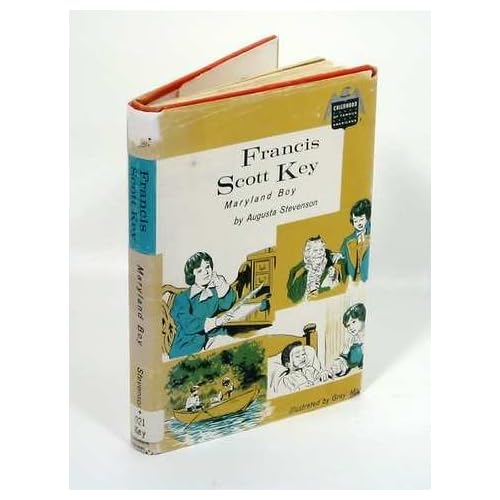
- Focus on the founding of our Nation. I know that the Lord is the original founder of our Nation and as I teach my children how our Nation came to be, I will ensure to focus on God's hand in the process. I will encourage the kids to learn many patriotic songs that gladly acknowledge the Lord's hand in the birth and preservation of our country. We began with the National Anthem, The Star Spangled Banner, and will continue through many other inspiring and wonderful songs. Since we began with our National Anthem, I purchased a book on Francis Scott Key (Childhood of Famous Americans), which I will be reading to my children. If we are to understand what our wonderful Nation stands for, we must understand those who created it!
- Focus on the Presidents of the United States. I have purchased a floor puzzle about all the Presidents of the United States. I also invested in flashcards and dry erase tools that will help with their memorization. I am also planning on purchasing a book that will give details of each president, both personal and political, to read to my kids. I have not yet found the right one but I will let you know when I do! :)
Floor puzzle by Melissa & Doug
As one of my motivational tools, I created a poster board sized United States Flag. I had the kids help color in the red stripes, as I read to them concerning the meaning of the symbols on the flag. I'm hanging the flag up and after learning about a state, the kids will be able to put a star on the flag with that state's postal abbreviation on it (we're learning those as well)! The kids are really excited about being able to build the flag and I'm hopeful they will always remember that each star represents one of our wonderful states!

Here's my little guy coloring the Red stripes that represent the blood of those who have died
or will die defending our beloved country!

Here's an example of what it will look like with some stars on the flag.
The kids really liked the puffy, glittery stars.
It's so important, as a mentor to your children, to share your passions with them and my love for God and Country is most important. I hope they cannot only see the love I have for our Nation but can also feel the overwhelming gratitude I have for those who made it possible!
<3
"6 Months" is BIG in a TJEd Home
The term "Six months" is a very important part of a TJEd home. It important to revisit many areas of our home often so that a wonderful learning environment can be maintained.
Every six months...
I'm really excited to share some of the ideas from my "Six Month Schedule" so I'll be posting on that really soon!!
<3
Every six months...
- ...we do our "Six Month Purge", which is when I go through the house and get rid of excess stuff. At this time I also go through all of our books, movies, music, etc., to ensure that they are all "classics" in my point of view. Do they have good values, morals, teachings? Are they quality items that should be allowed to fill our home & life? This is an area where I'm constantly working on because I'm a "keeper". I love to keep stuff, especially if I feel it has sentimental value. I will be doing another Six Month Purge within the next few weeks so I'm hoping for at least 5-6 bags of donation items.
- ...we do our "Six Month Goals", these are the areas of personal study that we'd like to focus on for the next six months. Each of us have a special binder that we keep our "Six Month Goals" in and we review them every morning during our Family Planning Meeting. Here are some of my current goals that I'm presently working on....Reading the Spanish Book of Mormon (this will obviously roll over into the next set of Six Month Goals), taking an online photography class, reading at least 7 classic books, write at least once a week in my journal, and working on the book I'm trying to write. I try to schedule myself personal time during the day to work on some of these areas but I'm finding the best time is in the morning before the kids are awake.
- ...I do our "Six Month Schedule", which gives me an overview of what I'd like for us, as a family, to accomplish within the next six months. It includes areas such as my vision for the year, our family project, the subjects I'd like to teach on, our field trips, a list of the books we'd like to read as a family, arts & craft ideas, things to cut out (every life can get too busy if we aren't willing to cut things out), service project ideas, etc. I love brainstorming and see what fun things I can come up with to do with the kids. I'll share some on later posts :)
- ...I do our "Six Month Inventory", which is where I analyze the books on the "Learners Bookshelf", see what school supplies I have, double check the items I have in the "Learners Closet", and figure out what needs to be replenished or purchased for upcoming topics of study.
I'm really excited to share some of the ideas from my "Six Month Schedule" so I'll be posting on that really soon!!
<3
Subscribe to:
Posts (Atom)